Honu Hatchlings Get Help at PMRF
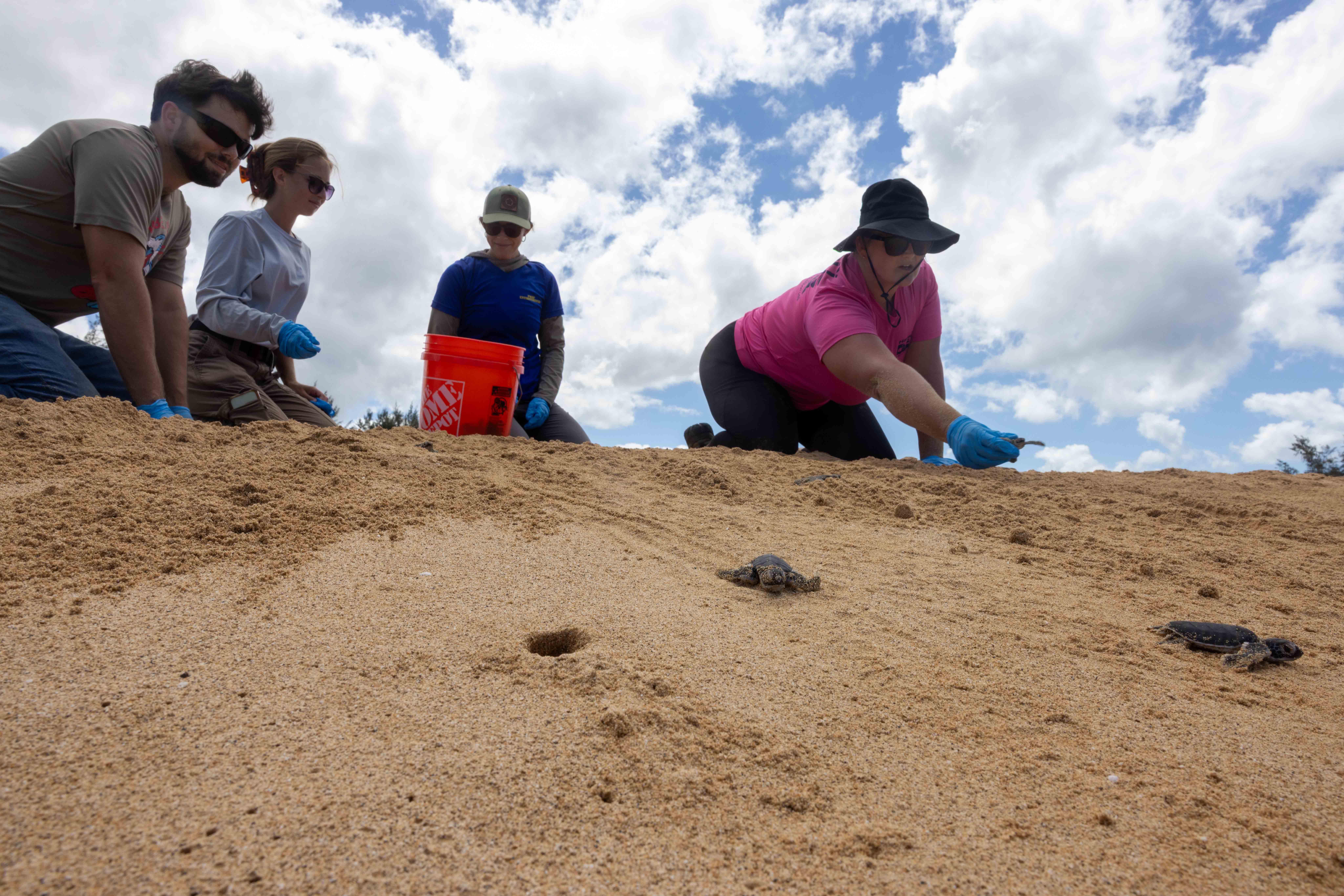
PMRF and state of Hawai‘i biologists assist sea turtle hatchlings move from their nest to the ocean. (Images and field response authorized under 50 CFR 223.206)
Sea turtle nesting season occurs each year from May to July, and the shoreline at PMRF is an attractive location for nesting turtles, with miles of intact sandy beaches, relatively low vehicle traffic, and lack of nighttime activity on the beach. Turtles are frequently seen basking on the beaches at Turtle Cove, the outpouring from Nohili Ditch, and other areas on base. So far this year, our Natural Resources team has identified more than 20 turtle nests on the installation.
During nesting season, the team walks the installation’s coastline twice a week in search of sea turtle nests. When a nest is identified, biologists mark off and monitor it, watching for signs that the eggs buried beneath the sand have hatched.
On June 24, biologists assisted 40 green sea turtle hatchlings as they made their journey to the ocean from the beach in front of Shenanigan’s restaurant. This was the first nest to hatch on PMRF during this year’s nesting season.
The efforts made to quickly identify and protect turtle nests help give each hatchling the best possible start on its journey to the ocean.
The hatchlings had a difficult time digging out of their nest, so a little assistance was provided from our team and partners with the Hawai‘i Department of Land and Natural Resources (DLNR), Division of Aquatic Resources.
“The conditions were pretty typical with what you would want to see; the sand was moist and not too compacted, so I am not sure why they weren’t able to dig out on their own,” said Jenna Budke of DLNR.
The team carefully excavated the site by hand and collected the live hatchlings to be counted and set free to make their trek to the ocean.
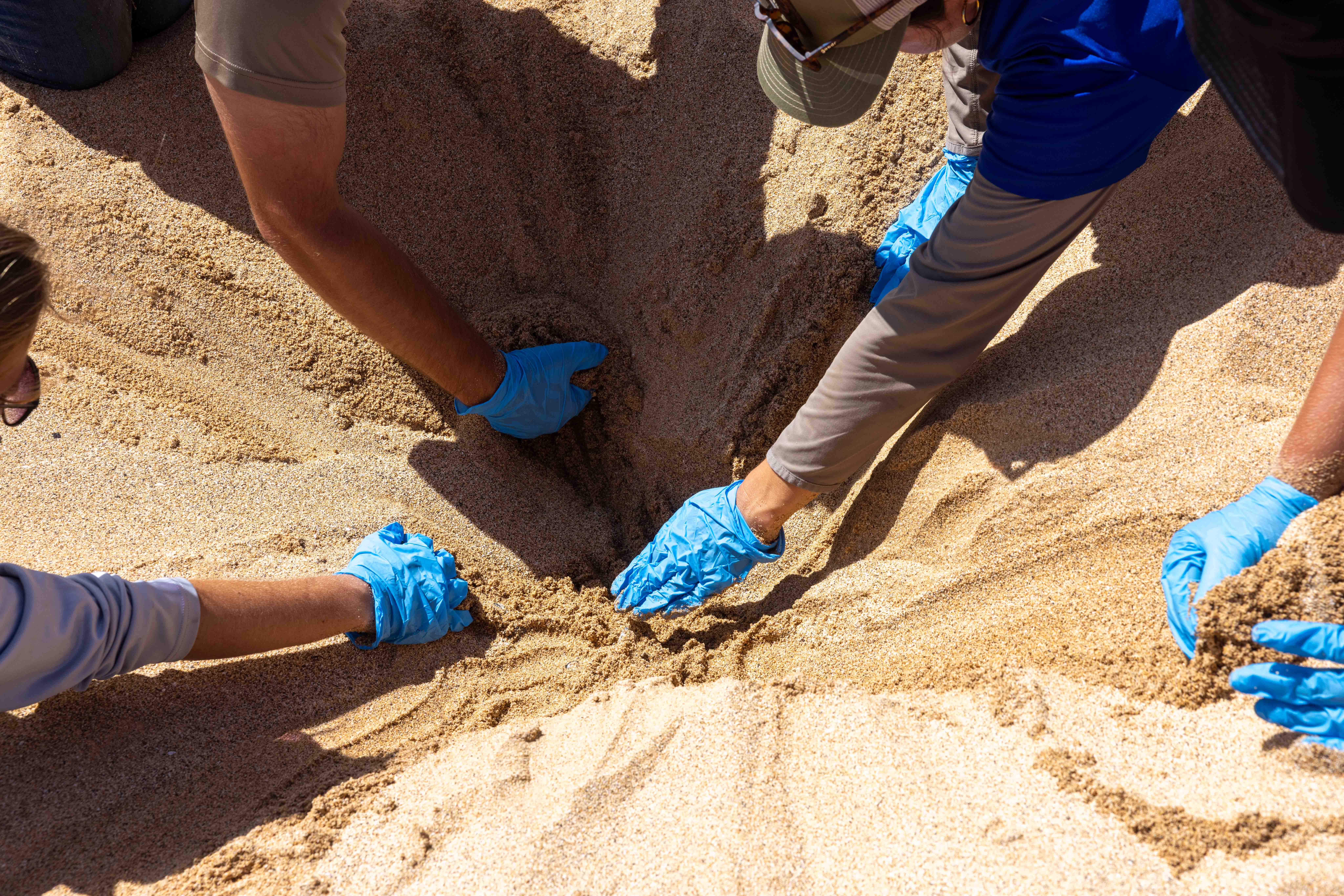
PMRF and state of Hawai‘i biologists excavate a sea turtle nest to ensure hatchlings reach the ocean. (Images and field response authorized under 50 CFR 223.206)
There are many dangers influencing the decline of sea turtles today, most of which are human-related, including vehicular beach traffic, which can crush eggs in nests; abandoned fishing lines and nets on the reef, which can entangle and drown sea turtles; high-speed boats traveling in near shore waters, which can break a turtle’s shell by the bow or propeller; and artificial lighting, which can disorient hatchlings when they emerge from their nests.
The efforts made to quickly identify and clearly mark off turtle nests allow PMRF to minimize negative impacts on hatchlings making their first strides towards life in the ocean.