Building Coastal Resilience:
Native Plants Transform Nohili Dunes
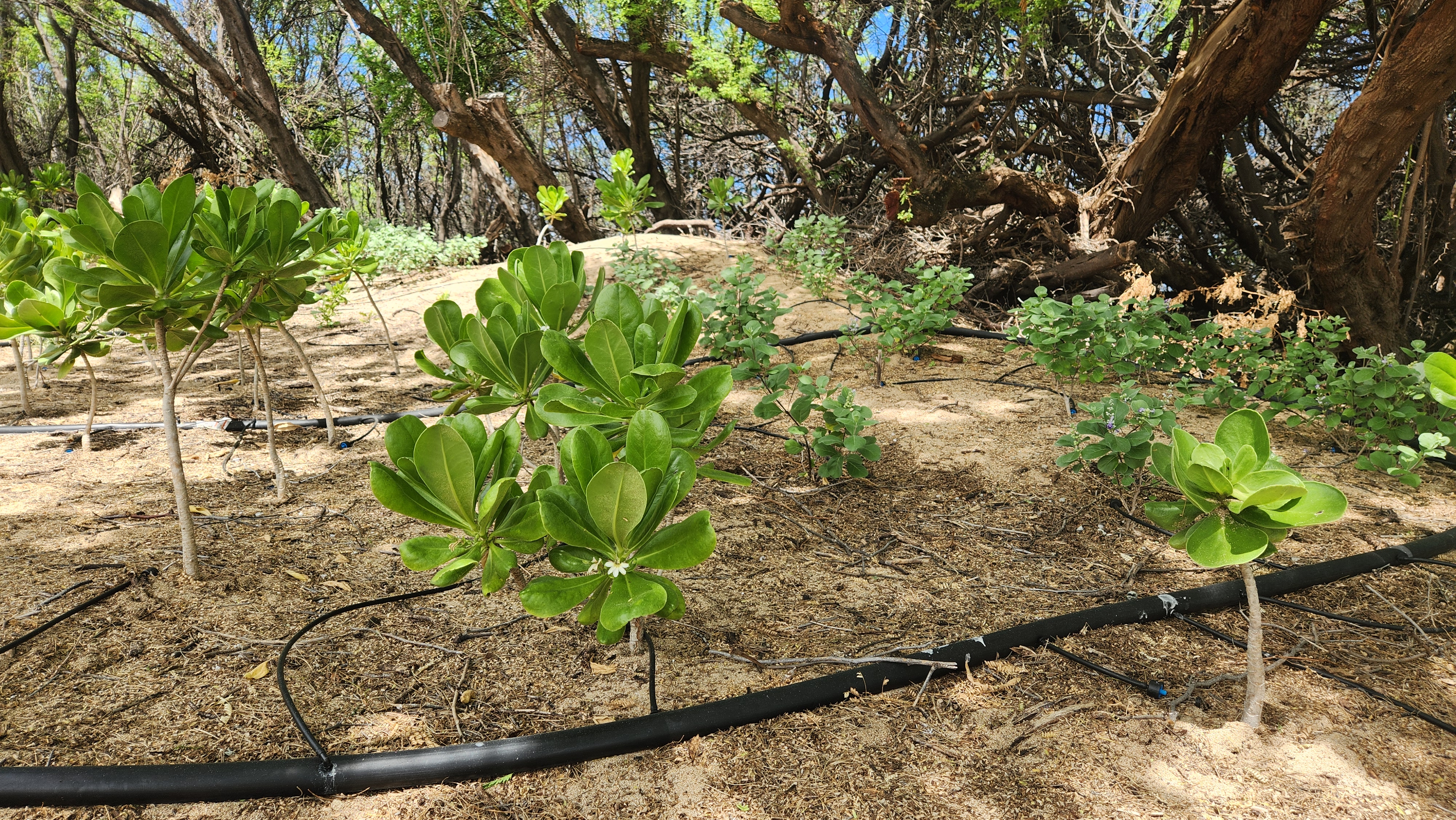
Among other native vegetation, hundreds of naupaka plants were planted by the PMRF project team.
Thousands of native and endemic Hawaiian plants are being planted in the Nohili Dunes as part of a project to restore and manage coastal dune habitats at PMRF. The project demonstrates a commitment to environmental conservation and historic preservation by balancing natural and cultural priorities.
Eight plots are being restored, totaling approximately 55,000 square feet. Efforts began with the eradication of invasive trees, scrub, and herbaceous vegetation using hand tools and herbicide. To protect the landscape, invasive trees like kiawe were cut to 6-12 inches above the ground and treated to prevent regrowth without pulling the roots. Active out-planting (or transplanting) efforts targeted at least 8,000 native flora from 10 local species. This process jumpstarts species recovery, compared to passive restoration, which allows species to repopulate from the natural seed bank.
“We used collective botanical knowledge to
optimize the out-planting ‘palette’ based on the growth characteristics of the plants,” said Brianna Kruse, University of Hawai‘i botanist at PMRF. “Each individual plot has a unique assemblage of native plants based on the site’s characteristics to create a biodiverse habitat.”
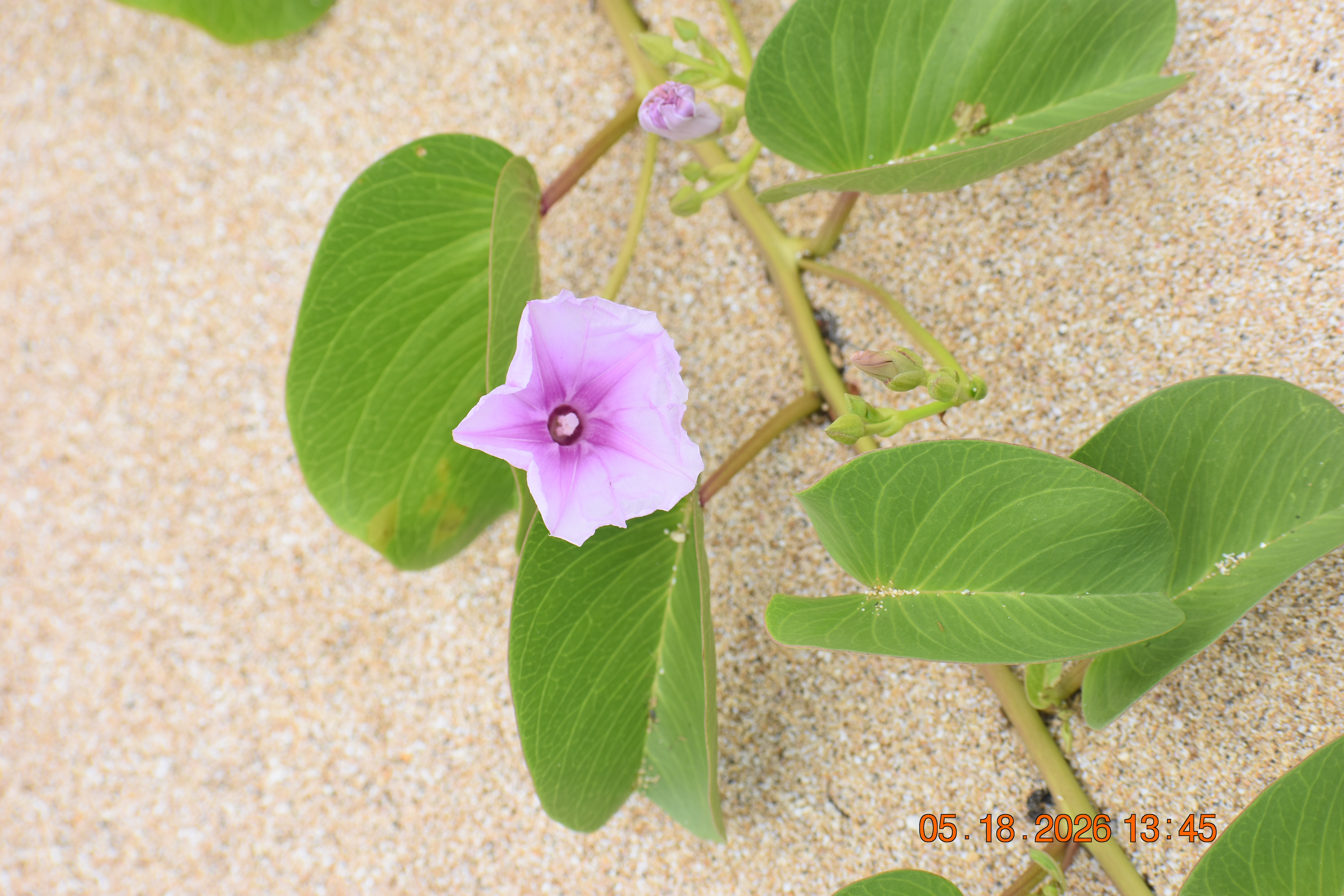
The PMRF project team also planted native pōhuehue.
Because the project area is situated in dunes known to contain iwi kūpuna (ancestral remains) and traditional cultural deposits, all work followed strict archaeological guidelines. “Restoration activities were conducted in a manner that minimized ground disturbance to the greatest extent possible,” said Tara Del Fierro, PMRF archaeologist. “This included ensuring that no field work caused ground disturbance to a depth greater than six inches.”
To further protect these resources, archaeological monitoring was required, and no wheeled or tracked vehicles were permitted within the project corridor.
The long-term goal of this work is to establish an erosion-mitigating network of native plants that protects infrastructure, improves biodiversity, and supports coastal resilience through strict adherence to conservation standards.