Protecting Kaua‘i’s Shared Wildlife: A Conversation with PMRF’s Natural Resources Program Manager
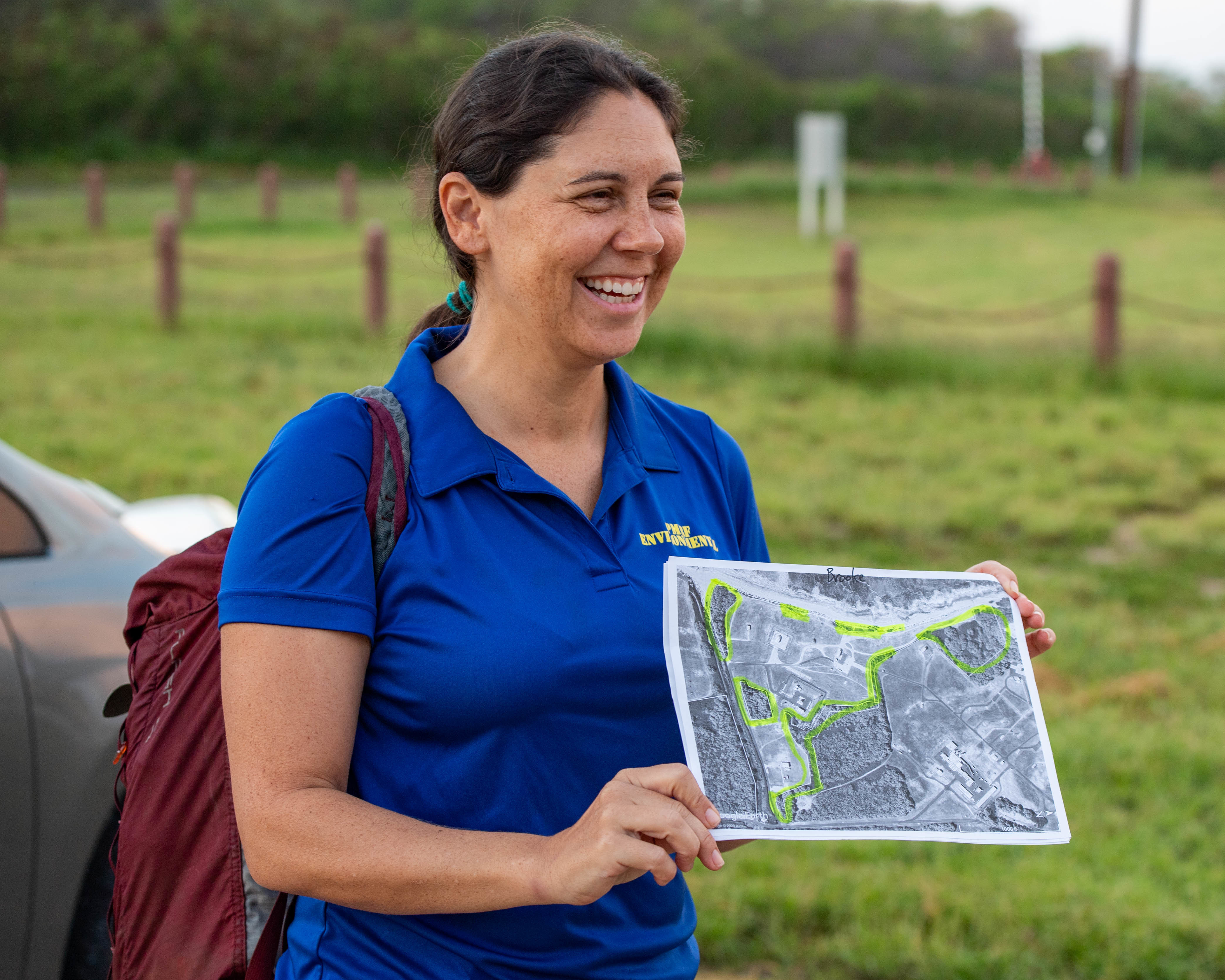
Brooke McFarland has led the Natural Resources program at PMRF since 2020, helping to protect native plants and wildlife on base and throughout the West Side. In this interview, she gives us a look inside her day-to-day work and how it benefits the community.
What is your educational background, and how did you first get into environmental/natural resources work?
I have a master’s degree in marine biology and a bachelor’s in zoology. I think most kids are interested in their surroundings and are natural biologists, I just never grew out of it! I grew up in coastal Alaska and spent a lot of time outdoors with my family. My first real job in the field was a summer position conducting fish counts and collecting data on salmon at a fly-in camp in western Alaska with only two other college students and a semi-reliable radio to check-in and report data. Since then, I’ve worked for the Forest Service and National Park Service in Alaska, as well as the University of Hawai‘i and state of Hawai‘i.
What brought you to PMRF?
I’d been living on Kaua‘i working as a biologist for almost a decade before I started at PMRF, initially supporting seabird surveys. I got to know the Mānā Plain and develop a love for the variety of native species found here. I was drawn to the opportunity to work within an ecosystem, rather than focusing on a few species in isolation, and to find pathways for that ecosystem and military mission to flourish in tandem. This is a unique and beautiful place, I’m lucky to come to work here every day.
What does a typical day look like for you?
I am the only Navy civilian within the Natural Resources program, working with a team of contracted field biologists, who carry out the bulk of the field work. My days are focused on responding to new and program-level issues, talking to external partners and regulators, and reviewing projects coming to PMRF. When you work with animals, there is always something new popping up! You never know where the day is going to take you. I’ve babysat stilt chicks near a road, excavated hatched turtle nests, and literally gone on a “wild goose chase” to capture an injured nēnē.
Could you highlight a few key programs or projects your team is working on right now?
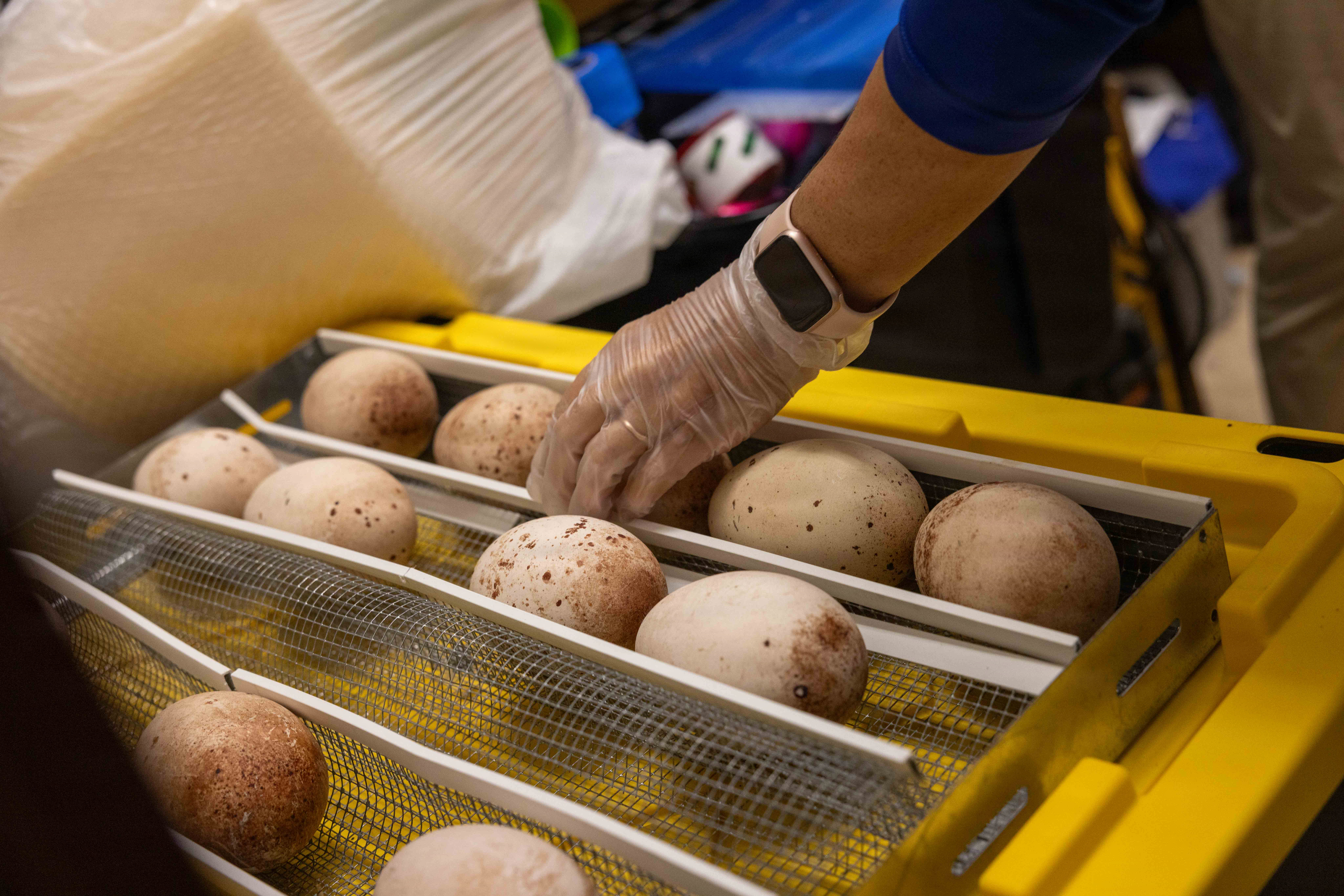
Brooke prepares to examine albatross eggs to ensure they are healthy before translocation.
We are outplanting native plants propagated at the PMRF nursery in several beautification projects on-base; getting ready for the Dark Skies season to prevent fledging seabird fallout; and monitoring a record number of turtle nests. We recorded 26 potential green sea turtle nests on base so far this year! This fall is albatross season, and PMRF has a long-running program of translocating albatross eggs to reduce the number of these large birds (six-foot wingspan!) around an active runway. We incubate the eggs here in our office until we are ready to place them in a nest with their new parents on the north shore. It is rewarding when they start to fledge in the summer!
How does your team partner with local environmental groups and active-duty service members on base?
Boundaries don’t mean much to plants, animals, or water, so we do a lot of work with partners outside of PMRF. We coordinate with state and federal agencies regularly as well as local organizations, such as Nā Maka Onaona, which has surveyed ‘opihi, native marine snails, on our north end. We recently worked with Ho‘omalu ke Kai to recycle a ghost net that washed ashore and with the Kaua‘i Albatross Network on our albatross translocation efforts. We also host an annual banding night for the only on-island native bird rehabilitation facility, Save Our Shearwaters, to both increase our knowledge of native bird populations on base and allow their teams banding practice prior to the shearwater fallout season.
I’m also part of a team that works with off-base groups who are developing projects that could benefit the Navy, and partner with those folks to find funding.
Military personnel help with marine debris collection efforts, assist in occasional work days, notify us when they see something unusual, such as a stray dog, and, most importantly, treat the environment respectfully.
How does your work connect with Kaua‘i’s West Side?
We often interact with the keiki on the West Side — whether they come to PMRF on a school trip or we visit their schools. All of the animals you find on base are really shared between PMRF and the rest of the community — they move on and off base or out to sea all the time. We see them for a portion of a day or year, and we keep them safe and allow them to move on to their next stop. Our actions here also protect the birds that never make it onto base by providing predator control. In addition, we partner with the community and landowners on larger issues, such as forest health, and recently hosted the Native Plant Society to visit the Nohili Dunes, which is a wahi pana (storied place) and one of our active restoration sites.
What usually surprises people when you explain natural resource management on a military installation?
I think the public is most surprised to learn we have a robust program! Although biologists in Hawai‘i are often familiar with our programs, most professionals from the mainland are not aware of the many qualified specialists working on installations across the country.
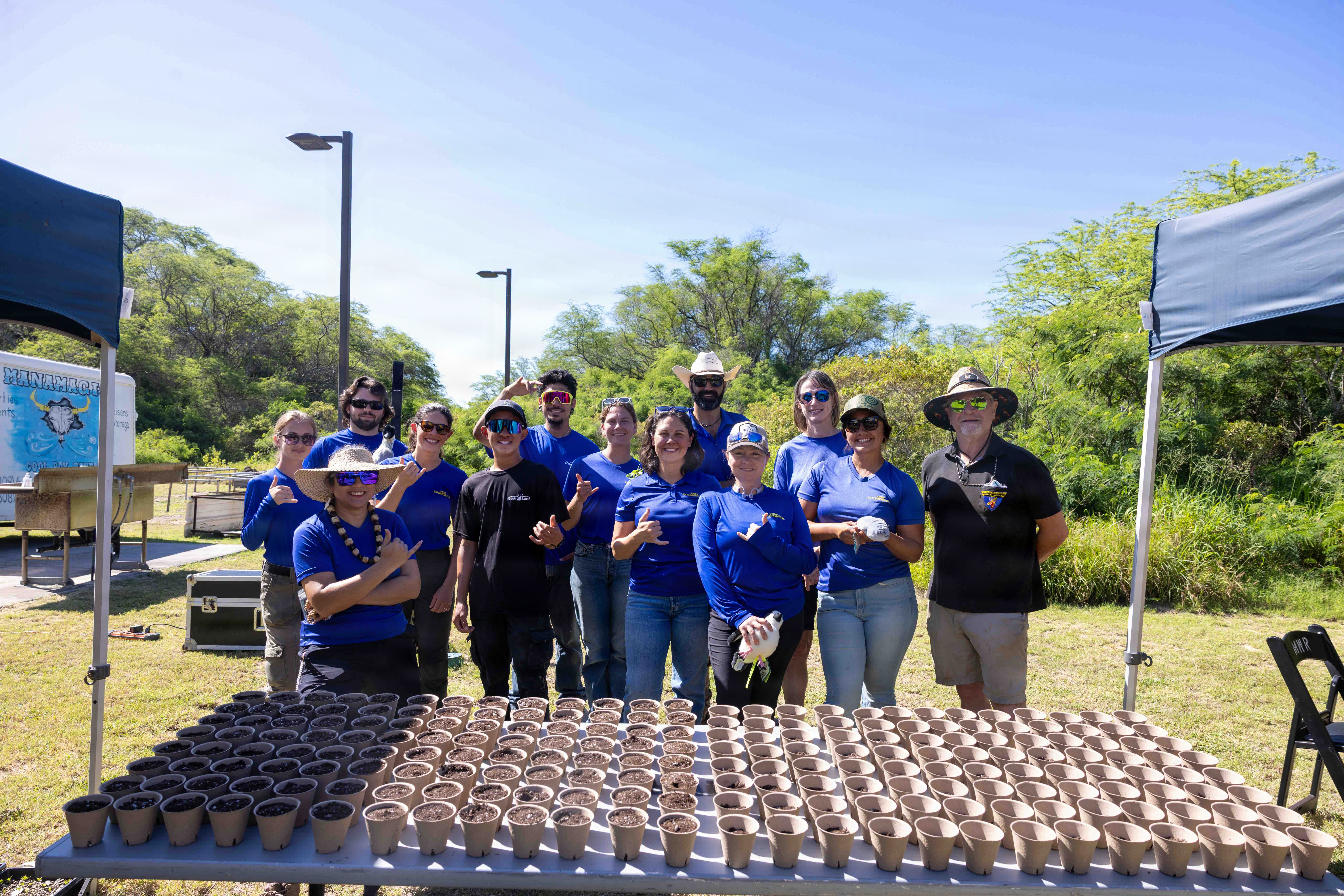
The PMRF Natural Resources team poses for a photo during West Kaua'i schools' annual field trip to the base.
How can base personnel or community members get involved, volunteer, or learn more about your efforts?
The best way to reach our team, whether it’s to report injured wildlife or inquire about our program and opportunities, is to call the PMRF Natural Resources Hotline at (808) 208-4416. We welcome community interest in our programs and often connect base personnel and community members to experiences that cater to their particular interest, such as assisting in turtle nest surveys, both on-base and island-wide.