Protecting Wildlife at PMRF
PMRF’s primary focus is conducting and measuring cutting-edge missile tests, but that’s not all the base does. We are also part of Kaua‘i’s West Side community. Being a responsible environmental steward is a year-round priority, which includes protection of endangered and threatened species. This winter, several types of birds will nest or migrate through or near Barking Sands, heightening the importance of our stewardship efforts.
Nēnē Nesting Season
September through April is a busy time for Hawai‘i’s state bird as young nēnē learn to walk, forage, and eventually fly. PMRF is home to one of the largest populations of nēnē, a type of goose endemic to Hawai‘i, that is currently considered endangered by the state and threatened by the federal government. The population reached an extreme low of roughly 30 individual nēnē in the 1950s, according to the U.S. Fish and Wildlife Service, but conservation efforts spurred a significant comeback. Now, as many as 637 individual nēnē are documented on PMRF alone and more than 2,400 on Kaua‘i.
Nēnē families are often seen near the main highway in Mānā and along roadways because open areas near bushes or trees are their ideal nesting grounds, so please drive with extra care.
Adult nēnē typically don’t fly during nesting season. Their feathers begin to molt, and they stay grounded while they watch over their young. They will be slow-moving and will keep a close eye on their goslings while they introduce them to their new home.
See the guidelines below for more detail on what to do if you see a nēnē.
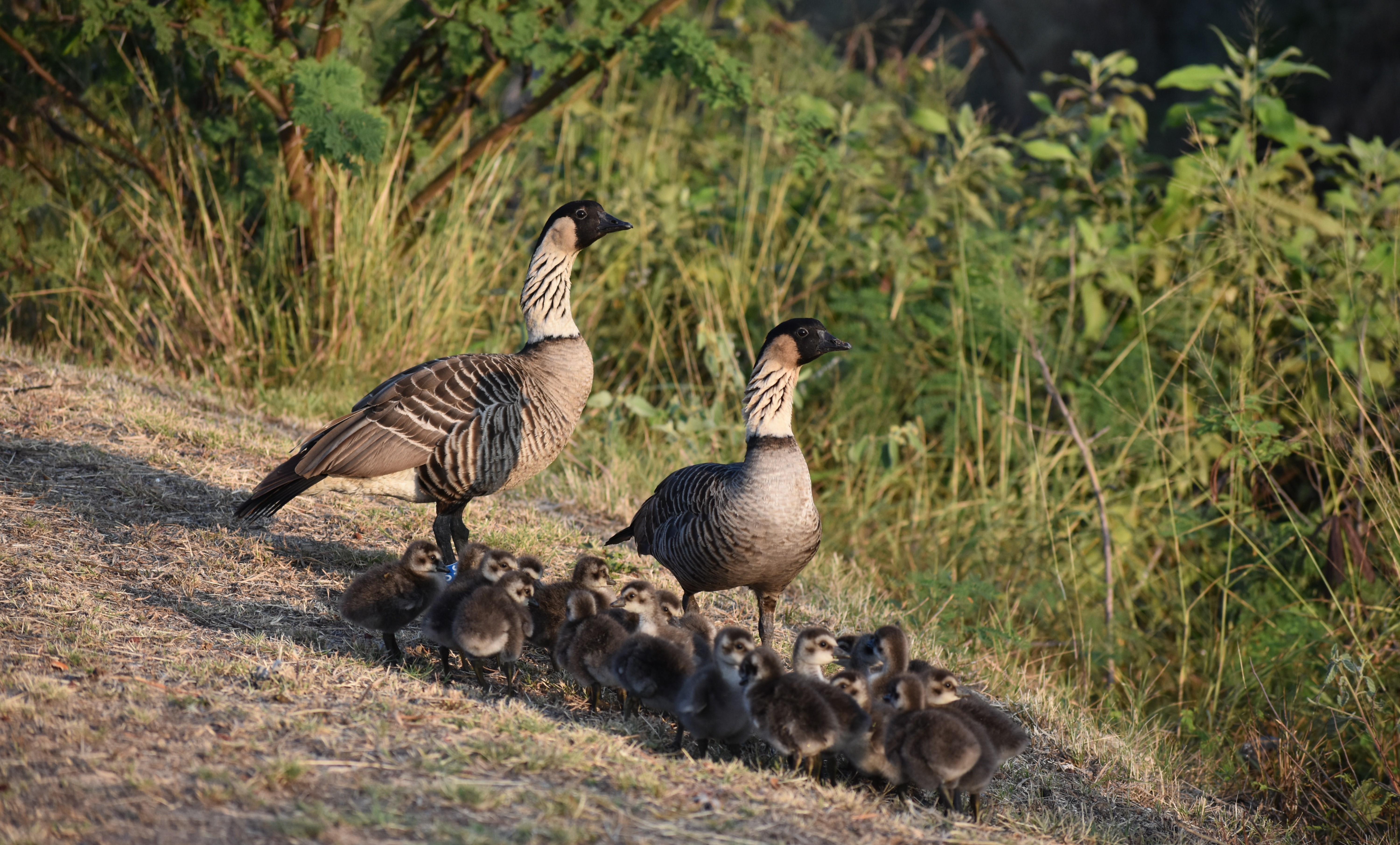
A nēnē family on PMRF. (PMRF Natural Resources, Yessica Carnley)
Safety tips:
- Slow down in areas where nēnē are common, especially near nēnē crossing signs
- Watch for crossing families – goslings move slowly and adults will be protective
- Don’t honk or rev your engine
- Give them plenty of space
How you can help:
- Never feed nēnē
- Keep pets leashed near possible nesting areas
- Report injured nēnē or lost goslings in Mānā to the PMRF Natural Resources Hotline: 808-208-4416
Dark Skies at PMRF
PMRF recently completed another successful year of the Dark Skies program, an initiative to help young birds safely navigate in their first migration. Newell’s shearwater, Hawaiian petrel, and band-rumped storm-petrel – all listed under the Endangered Species Act as threatened or endangered – as well as the wedge-tailed shearwater migrate from the mountains to the sea after they hatch in the fall (a process called “fledging”), using the light from the moon and stars to navigate their way to sea.
While this process is remarkable, it also means the fledglings are attracted to artificial light sources. These lights, such as streetlights or even much smaller sources, can disorient young birds, who may end up circling in confusion until they “fall out” from exhaustion and become vulnerable to predators and dehydration.
Dark Skies, which ran from Sept. 15 to Dec. 15, 2025, minimized artificial light sources that can interfere with the birds’ flight paths. Protective measures implemented by PMRF staff included shielded lighting, reduced non-essential lights during peak fledging season, community outreach to raise awareness about light pollution, and increased partnerships with environmental organizations and agencies committed to seabird recovery.
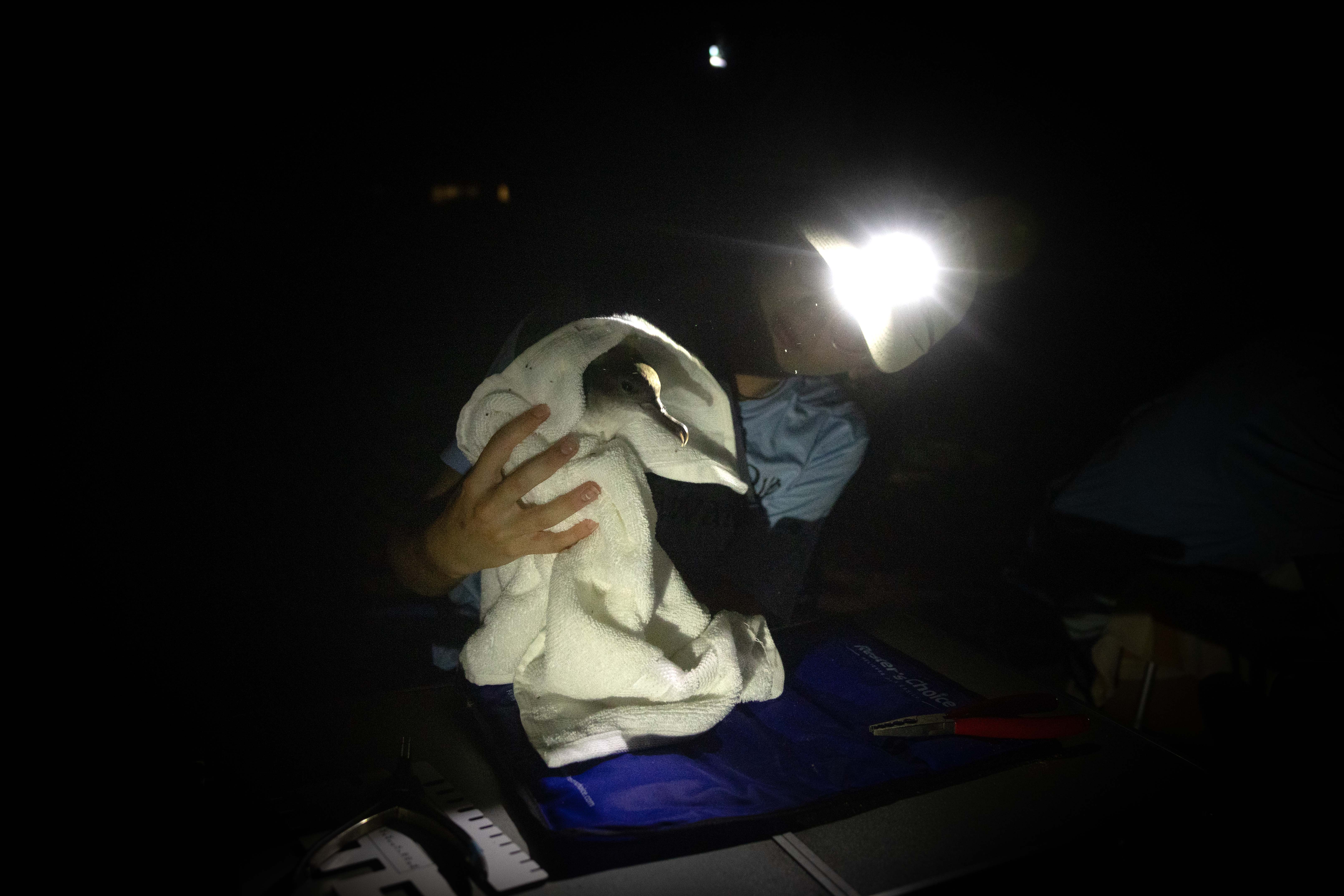
A specialist from Save Our Shearwaters practices banding a wedge-tailed shearwater on PMRF.
“Protecting Hawai‘i’s native species is a shared responsibility,” said PMRF Commanding Officer Captain Robert Prince. “Through this program, we can continue to make a positive difference in our conservation efforts for future generations.”
Dark Skies has contributed extensively to the recovery and survival of fledgling shearwaters and other native seabirds by providing a safe passage for potentially hundreds of fledglings that may have otherwise died.
In preparation for this year’s program, PMRF's environmental team, members from Save Our Shearwaters, and volunteers gathered at Waiapua‘a to band wedge-tailed shearwaters. These bands help to identify and track individual birds and long-term populations.
PMRF thanks residents, businesses, and the public for doing their part to protect native seabirds.
For more information about nēnē, the Dark Skies initiative, volunteer opportunities, or PMRF’s environmental program, please visit the PMRF Barking Sands website.